
1 of 1
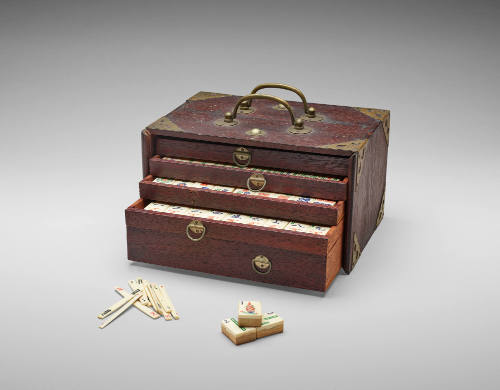
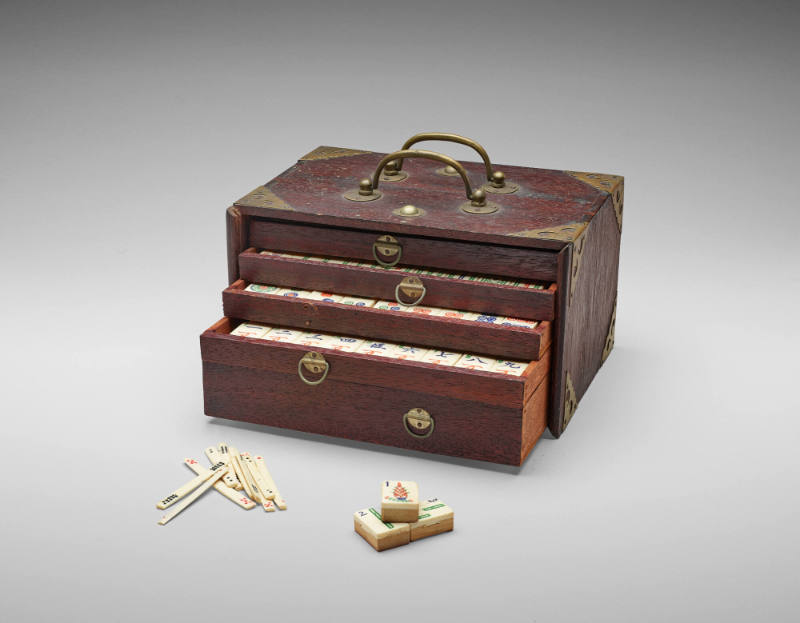
Mah-Jongg Game Case
Manufacturer
Parker Brothers
(American, founded 1883)
Dateafter 1923
Mediumwood; brass
Dimensions5 1/2 × 9 1/4 × 6 1/4 inches (14 × 23.5 × 15.9 cm)
Credit LineGift of Nelda C. Stark, 1981
Object number71.900.37.B
ClassificationsGame Equipment
DescriptionRectangular shape; attached brass handles on top; eight chinoiserie pierced corner brackets; sliding removable front with gold colored Chinese characters and Mah Jongg on front, reverse face signed: One Genuine Set/ Mah-Jongg / Trademark U.S. Pat. Off / Made in China / Patented April 3, 1923; five drawers with brass ring pulls.Label TextThe Mah-Jongg craze first struck America in the early 1920s. At the same time, art and design styles from East Asia also became popular in America and Europe. Orange was no different! Mah-Jongg was played at the Pinehurst Country Club in the 1920s, and sets were sold at Joe Lucas and Sons jewelry store.
Miriam Stark’s Mah-Jongg set is made of ivory and bamboo. J.P. Babcock’s rule book, first published in 1920, was among the first to standardize Mah-Jongg rules in the United States. It is easy to imagine Miriam setting up a card table in the Stark House to play with her closest friends, as many women do even now.
ProvenanceW.H. Stark [1851-1936]; by inheritance to his son H.J. Lutcher Stark [1887-1965]; by inheritance to his wife Nelda C. Stark [1909-1999]; gifted March 5, 1981 to the Nelda C. and H.J. Lutcher Stark Foundation; accessioned to The W.H. Stark House
On View
On view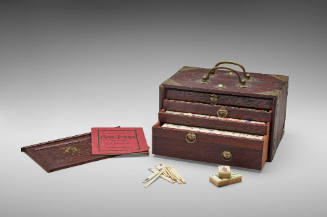
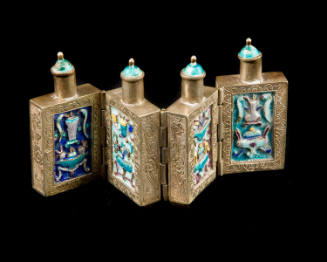
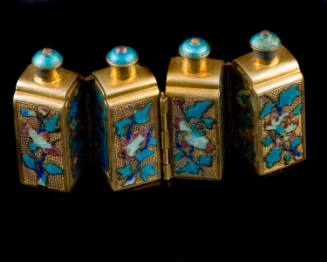
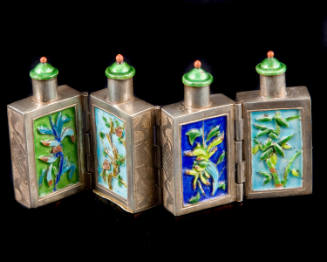
Unknown Chinese
Unknown Chinese
John Young-Hunter
c. 1900

Unknown German
Set/Objects