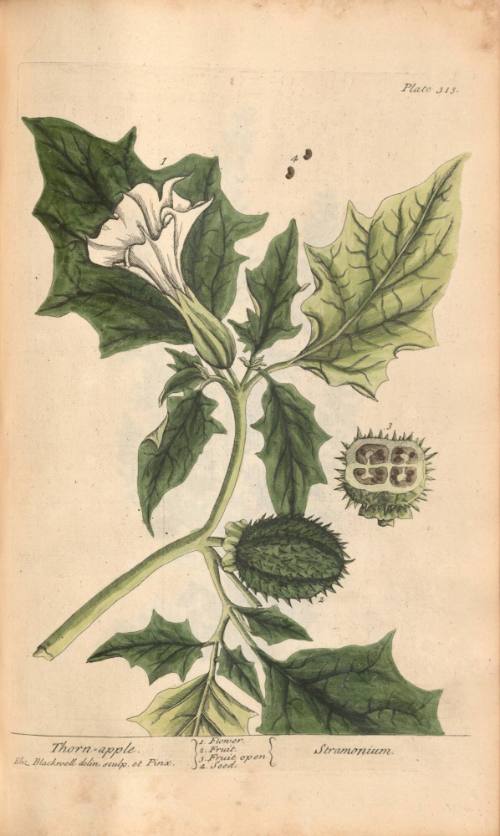
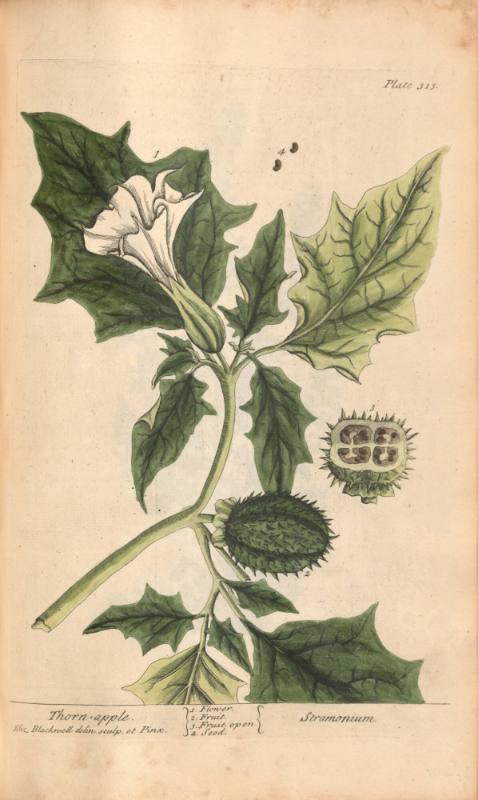
Thorn-apple. Stramonium.
Author
Elizabeth Blackwell
(English, 1699 – 1758)
Artist
Elizabeth Blackwell
(English, 1699 – 1758)
Engraver
Elizabeth Blackwell
(English, 1699 – 1758)
Colorist
Elizabeth Blackwell
(English, 1699 – 1758)
Date1739
Mediumcopper plate engraving on paper; hand-colored
Dimensions14 1/4 × 9 inches (36.2 × 22.9 cm)
Credit LineBequest of H.J. Lutcher Stark, 1965
Object number11.40.1.B.313_Thorn-apple
ClassificationsInformation Artifacts
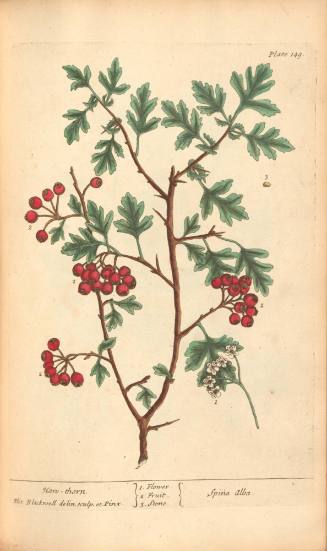
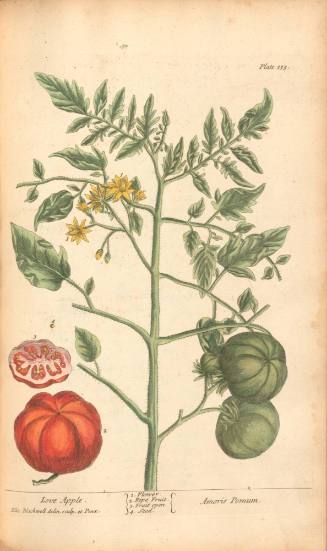
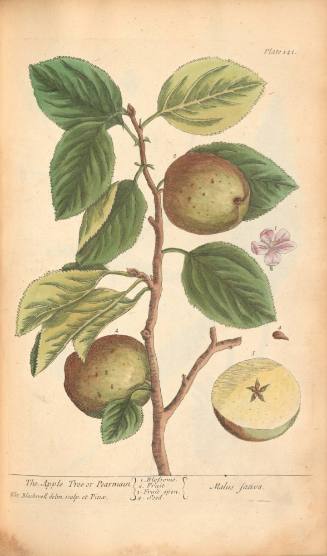
Label TextPlants provide medicines for healing. They also can be harmful. Knowing which plants have specific qualities is important. Throughout history, people have gathered information about plants and their uses. Writing down the information makes it possible to share this important knowledge. A book that catalogues plants and their healing qualities is an herbal. Blackwell’s herbal said the leaves of the thorn-apple were good for burns and scalds. It also reported that the seeds induced sleep. Other writers have cited this Datura stramonium, also called jimson weed, for hallucinations.
ProvenancePurchased February 17, 1962 through (Nada Kramar, Washington, D.C.) by H.J. Lutcher Stark [1887-1965]; bequeathed September 2, 1965 to the Nelda C. and H.J. Lutcher Stark Foundation; accessioned to the Stark Museum of Art
On View
Not on view