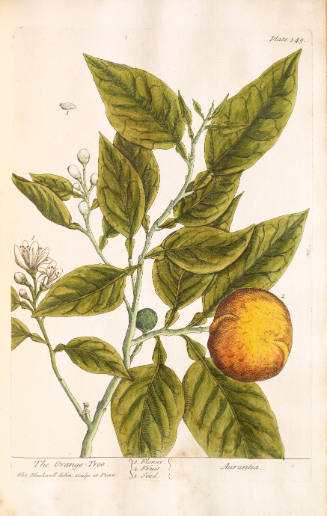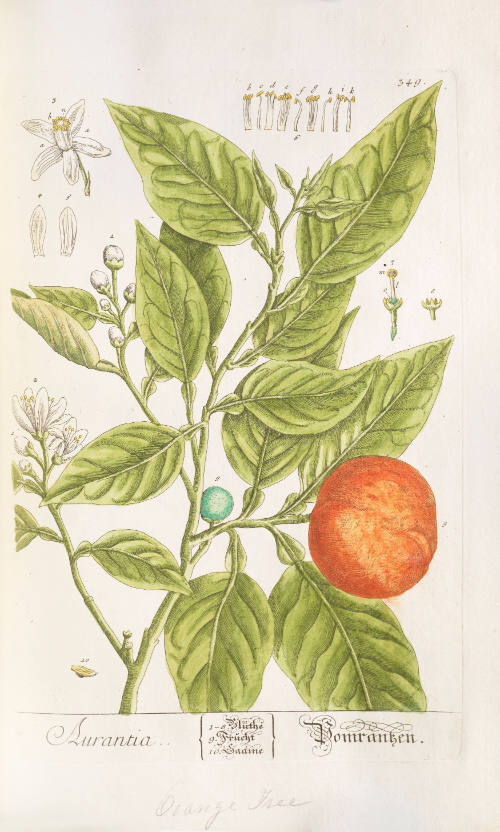
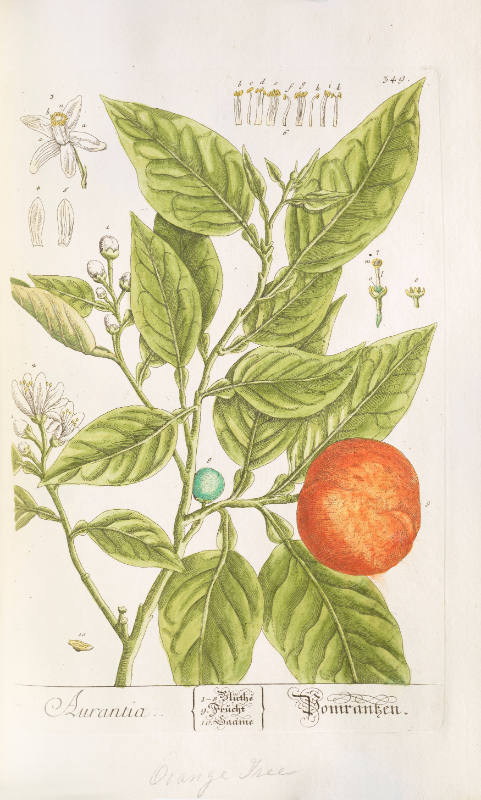
Aurantia
Artist and Author
Elizabeth Blackwell
(English, 1699 – 1758)
Engraver
Nikolaus Friedrich Eisenberger
(German, 1707 - 1771)
Date1760
Mediumengraving on paper, hand-colored
Dimensions14 1/4 × 9 1/4 inches (36.2 × 23.5 cm)
Credit LineBequest of H.J. Lutcher Stark, 1965
Object number11.40.2.D.051_Aurantia
ClassificationsInformation Artifacts
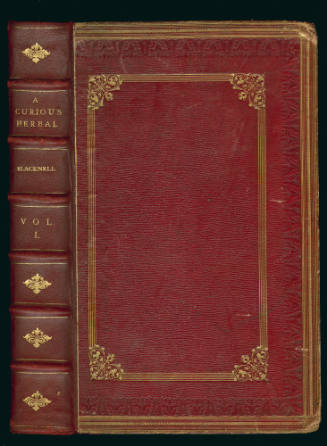
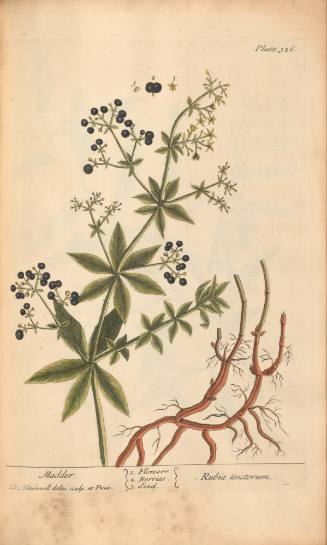
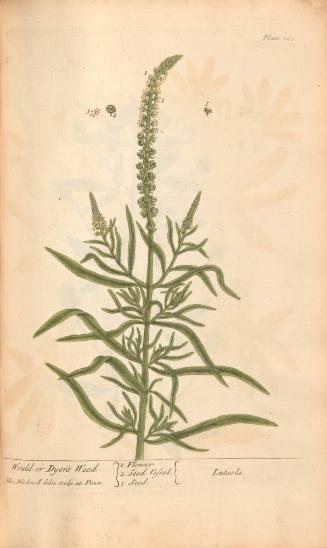
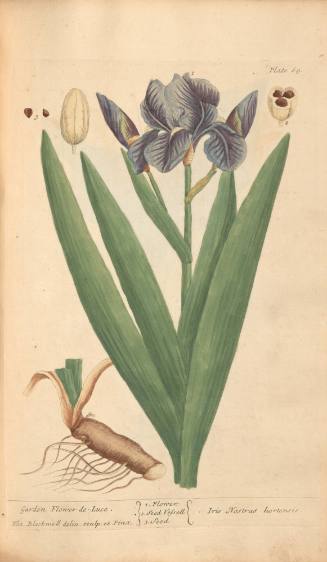
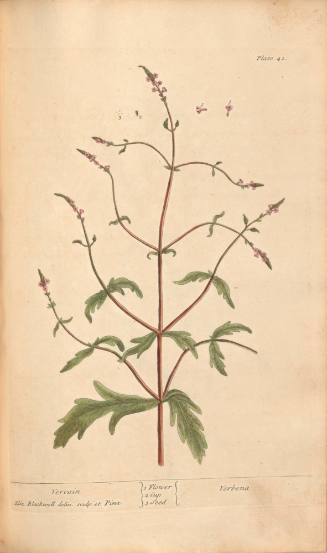
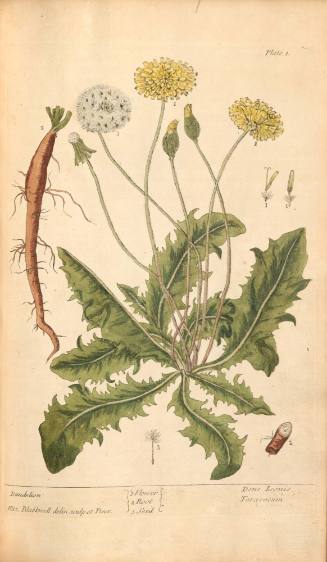
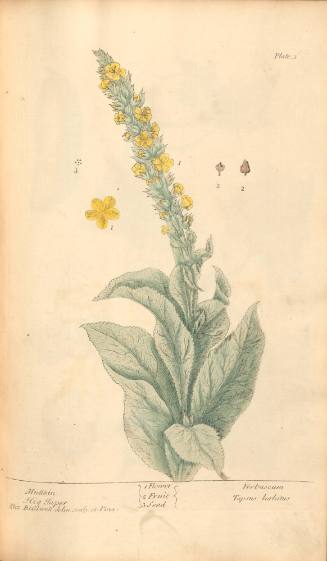
DescriptionThis page is bound in Volume 4.Label TextBlackwell stepped outside usual conventions for an eighteenth-century woman to write and illustrate an herbal. In 1739, she published A Curious Herbal¸ a catalogue of plants used for medicine. She included an entry on The Orange Tree. She wrote, “The Juice is much used for the Scurvy and Burning Fevers.” Blackwell’s book was later expanded and published in Latin and German. Its Latin word for her orange was Aurantia. Eisenberger re-drew the illustrations. For Aurantia, he kept the basic composition of the single orange fruit among green leaves. The colorist used a darker orange fading to a lighter tint to create the illusion of the rounded fruit.
ProvenancePurchased October 10, 1962 through (Nada Kramar, Washington, D.C.) by H.J. Lutcher Stark [1887-1965]; bequeathed September 2, 1965 to the Nelda C. and H.J. Lutcher Stark Foundation; accessioned to the Stark Museum of Art
On View
On view